Chasqui Networks: The Andean Information Highway

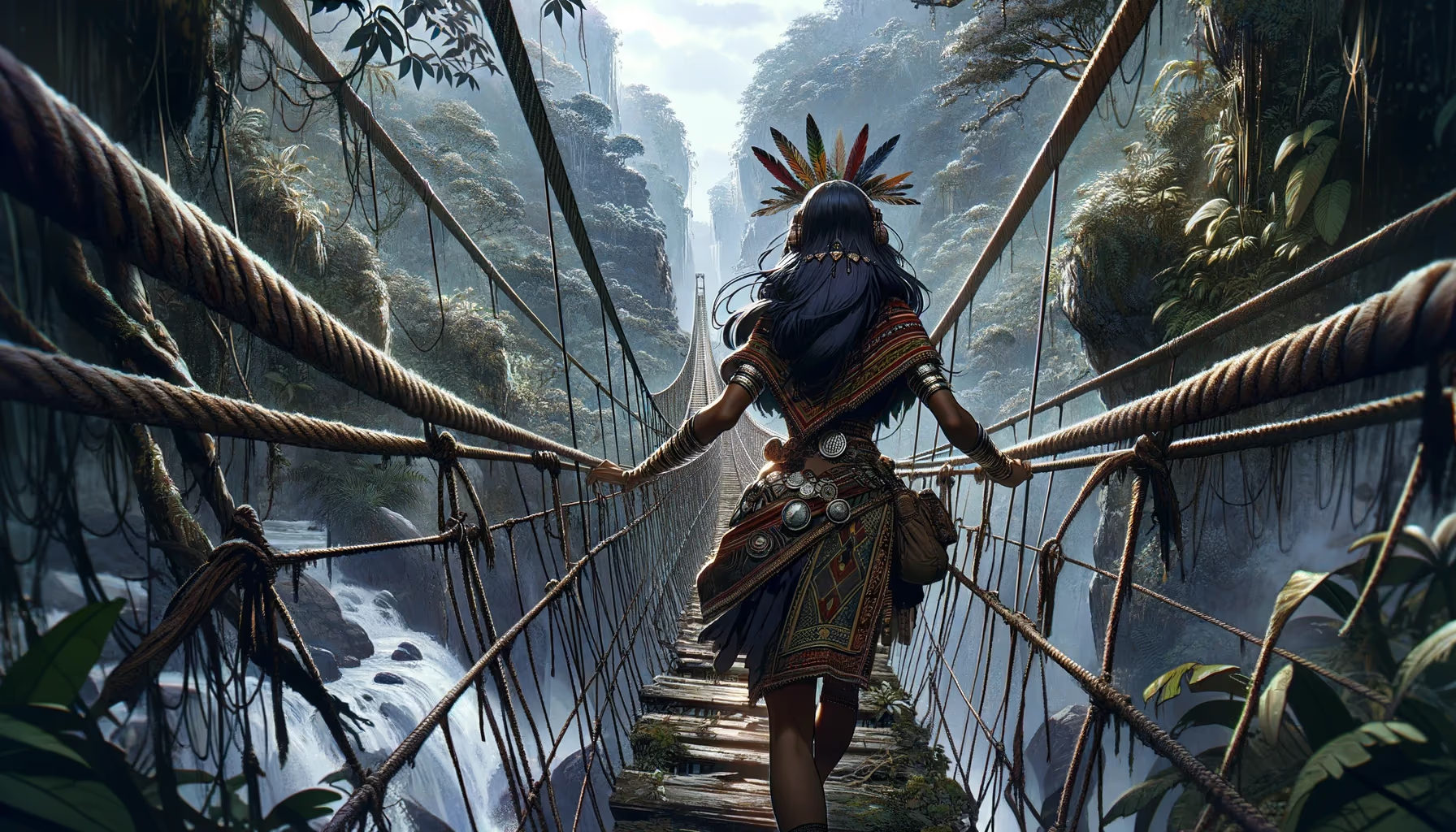
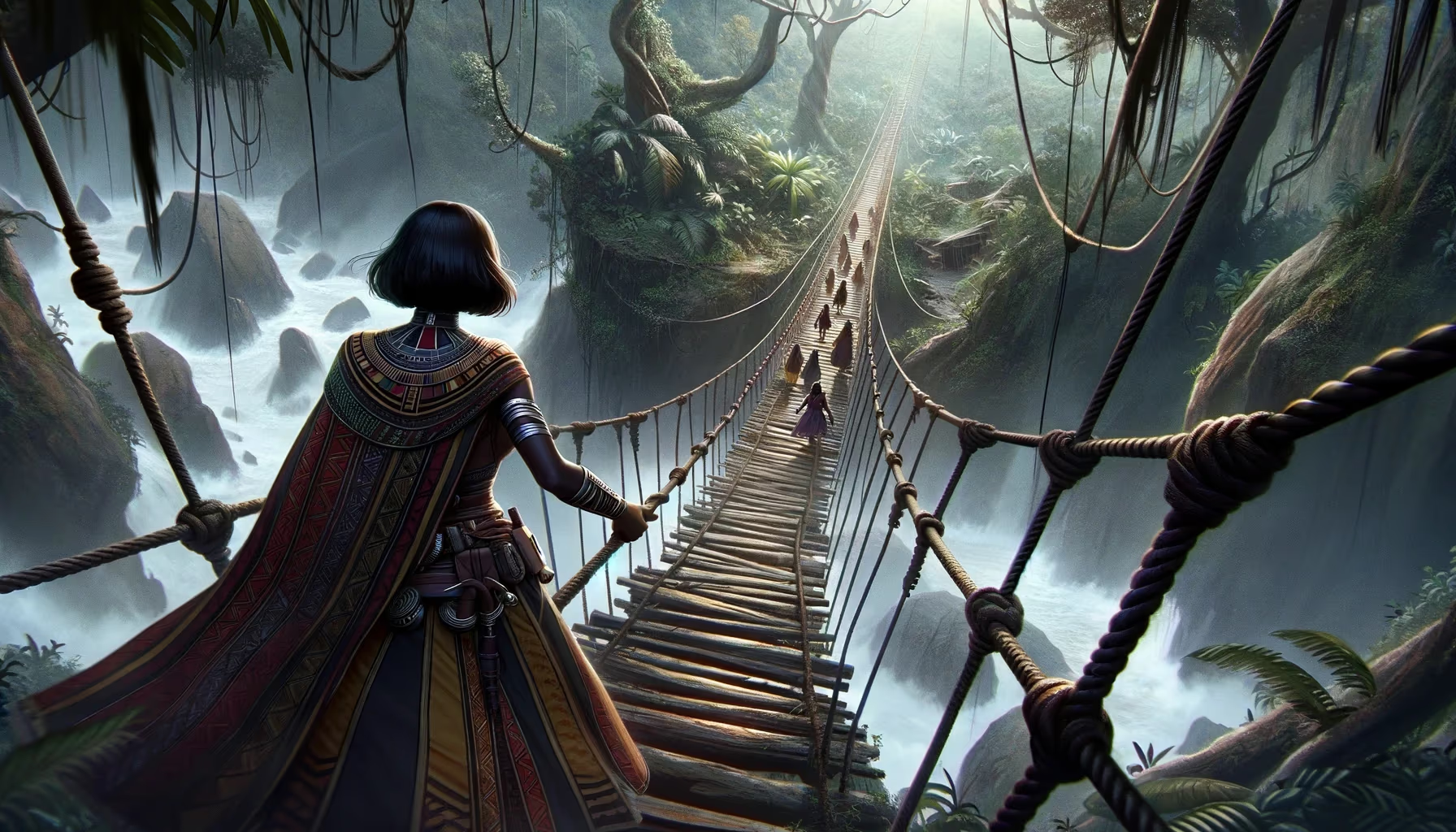
Chasqui systems fused athletics, memory, logistics, and territorial design into one communications doctrine. The road was physical; the network was civilizational intelligence.

Keyword Cloud

Chasqui relayQhapaq Nan corridorsTambo nodesKhipu recordsYouth enduranceCommunication governance

Core Concepts

Relay Protocol

Speed emerged from sequence design: many trained runners across short segments outperform one heroic long-distance effort.

Node System

Tambos and chaskiwasi nodes synchronized timing, rest, storage, and route continuity.

Memory Technology

Khipu and oral transmission worked together, allowing messages to carry both numbers and political instructions.

Youth Command

Chasqui networks depended on disciplined young bodies trained in altitude movement, breath control, and ethical duty.

Glossary Spotlight

Chasqui

Architecture and Engineering

Chasquis were elite relay runners who moved messages, goods, and timing intelligence across mountain distances.

Why It Matters Here: Chasqui is a system role: speed, memory, and protocol in one human node.

Qhapaq Ñan

Architecture and Engineering

Qhapaq Ñan is the extensive Andean road system linking ecological zones, settlements, and logistics nodes.

Why It Matters Here: The road is not background scenery; it is the medium of governance.

Tambo

Architecture and Engineering

Tambos were waystations for storage, rest, and redistribution on strategic routes.

Why It Matters Here: Tambos enabled cadence, recovery, and handoff reliability across altitude zones.

Chaskiwasi

Architecture and Engineering

Chaskiwasi were small relay houses where runners synchronized handoffs in communication routes.

Why It Matters Here: Chaskiwasi stations show communication as engineered continuity.

Khipu (Quipu)

Language and Knowledge Systems

Khipu are knotted-cord information systems used for accounting, administration, and possibly narrative memory.

Why It Matters Here: Khipu links counting, storage, and decision-making to messenger flow.

Pututu

Ritual, Music, and Movement

Pututu is a conch-shell trumpet used to signal distance, announce arrival, and activate ceremonial attention.

Why It Matters Here: Acoustic signaling mattered for readiness, warning, and timed exchange.

Runasimi

Language and Knowledge Systems

Runasimi means the language of the people and is a preferred self-name for Quechua language traditions.

Why It Matters Here: Runasimi carries instruction precision and social trust between nodes.

Tawantinsuyu

Society and Governance

Tawantinsuyu means the four united regions and names the Inka political-territorial system.

Why It Matters Here: Relay intelligence only makes sense when read at full state scale.

Curated Concept-Art Trail

Atlas Mission Routes

Reconstruct the Relay Corridor

Map altitude pressure against speed, rest points, and route resilience.

Qhapaq NanRelayAltitude

Node Discipline and Handoff

Use station logic to study how messages remained accurate across long distances.

ChaskiwasiProtocolTiming

Command, Memory, and State Scale

Analyze how communication systems interfaced with governance and resource logistics.

GovernanceKhipuScale

Extreme Route Endurance

Frame mountain passages as elite athletic engineering, not only mythic heroism.

AthleticsElevationRoute Design

Signal Ecology and Timing

Study acoustic, visual, and terrain cues that kept relay operations synchronized.

PututuSignalsTerrain

Action Missions

Build a Chasqui Relay Drill

Simulate handoff messaging with strict timing, memory rules, and verification checkpoints.

Mission Steps

  1. Create four stations across one classroom or block.
  2. Pass one spoken message plus one symbolic token.
  3. Compare final output against original source.

Route Memory Challenge

Train recall under movement by combining map cues, verbal codes, and timing pressure.

Mission Steps

  1. Map a short corridor with five checkpoints.
  2. Assign one code phrase per checkpoint.
  3. Run relay twice and measure error reduction.

Signal and Sound Protocol

Design one visual and one audio signal system for mission-ready handoffs.

Mission Steps

  1. Define signal meanings before movement begins.
  2. Test signals across noise and distance conditions.
  3. Document which signal set produced fewer errors.

Chasqui Fitness Benchmark

Create altitude-aware endurance benchmarks that prioritize pacing and recovery intelligence.

Mission Steps

  1. Run timed intervals with controlled rest windows.
  2. Track breath stability and pace consistency.
  3. Set personal relay goals for next month.

Research Question Lab

What made Andean relay networks resilient under altitude, weather, and distance stress?

How did communication accuracy survive multi-node transmission?

Which modern education workflows can borrow chasqui handoff logic?

How should we combine oral memory and symbolic memory in youth training?

What metrics define a healthy relay chain: speed, clarity, trust, recovery?

How can chasqui discipline become a leadership curriculum for students?

Deployment Playbooks

School Relay Academy

Build a leadership lab around timing, memory, and responsible handoff.

Action Stack

  • Run weekly relay simulations.
  • Audit message clarity every round.
  • Reward trust and recovery, not only speed.

City Event Coordination Stack

Use chasqui protocols for volunteer routing, briefings, and fail-safe communication.

Action Stack

  • Define node captains per zone.
  • Set fallback signal channels.
  • Debrief and improve after each event.

Scholarly Reading Layer

Foundational Readings

UNESCO World Heritage: Qhapaq Nan (1459)

Primary heritage dossier for the trans-Andean communications corridor.

Britannica: Inca (roads, relay service, quipu)

Compact scholarly overview of administrative and logistics systems.

World History Encyclopedia: The Inca Road System

Accessible entry point for route design, bridges, and relay cadence.

Deep-Dive Readings

UNESCO (2024): 10 years of Qhapaq Nan World Heritage

Recent policy and conservation perspective across six participating countries.

Peru Ministry of Culture: Qhapaq Nan program overview

National management framing and continuity of Qhapaq Nan stewardship.

Antiquity: Beyond Inca roads—Redes Andinas (DOI:10.15184/aqy.2024.84)

Current archaeological project on road-network palimpsests beyond imperial simplifications.

Advanced Technical Readings

JAA: Rethinking imperial infrastructure (DOI:10.1016/j.jaa.2016.06.001)

Bottom-up analysis of road use by local actors and non-state exchange activity.

Antiquity: Archaeological mobilities from high Andes to Pacific (DOI:10.15184/aqy.2022.168)

Long-duration mobility framing useful for pre-Inca and Inca continuity models.

Deep Research Modules

1) From Road to Information Doctrine

Qhapaq Nan is often taught as infrastructure, but chasqui practice shows it was also a cognitive system. The road distributed attention, timing, and command across a living chain.

What matters is not only distance covered. What matters is latency management: how quickly reliable signals move from one decision center to another.

That framing makes this topic instantly relevant to modern network literacy and youth tech education.

2) Athletic Intelligence at Altitude

Relay runners in mountain terrain require more than speed: route awareness, recovery discipline, handoff precision, and attention control are all mission-critical.

This turns chasqui into a cross-disciplinary classroom: physiology, logistics, ethics, and communication design in one historical system.

For your project, this supports a powerful youth narrative: body training and information leadership belong together.

3) Rebuilding Chasqui Logic in Modern Learning

A modern chasqui challenge can map message handoffs across classrooms, neighborhoods, or museum stations using time stamps and route constraints.

The goal is to teach reliability, teamwork, and protocol discipline - not only speed.

In Pachakuna terms, this is where concept art becomes playable civic pedagogy.

Build + Learn Routes

Chasqui Hub Home

Keep this page as your command node for all communication missions.

Glossary: Chasqui

Definitions, related terms, and route context.

Atlas: Andes Corridor

Study mountain geometry behind relay movement.

Atlas: Ancient Cusco

See the command center where route intelligence converged.

Concept Art Relay Scenes

Open the visual mission trail for chasqui-like movement and signaling.

AI Library Crosslinks

Compare repeated motifs across all generated scenes.

Start-Here Funnel

Convert communication lore into your first playable challenge.

Submit Team Protocol

Publish your relay rules and invite other groups to replicate.

Related Scenes