Story Mode
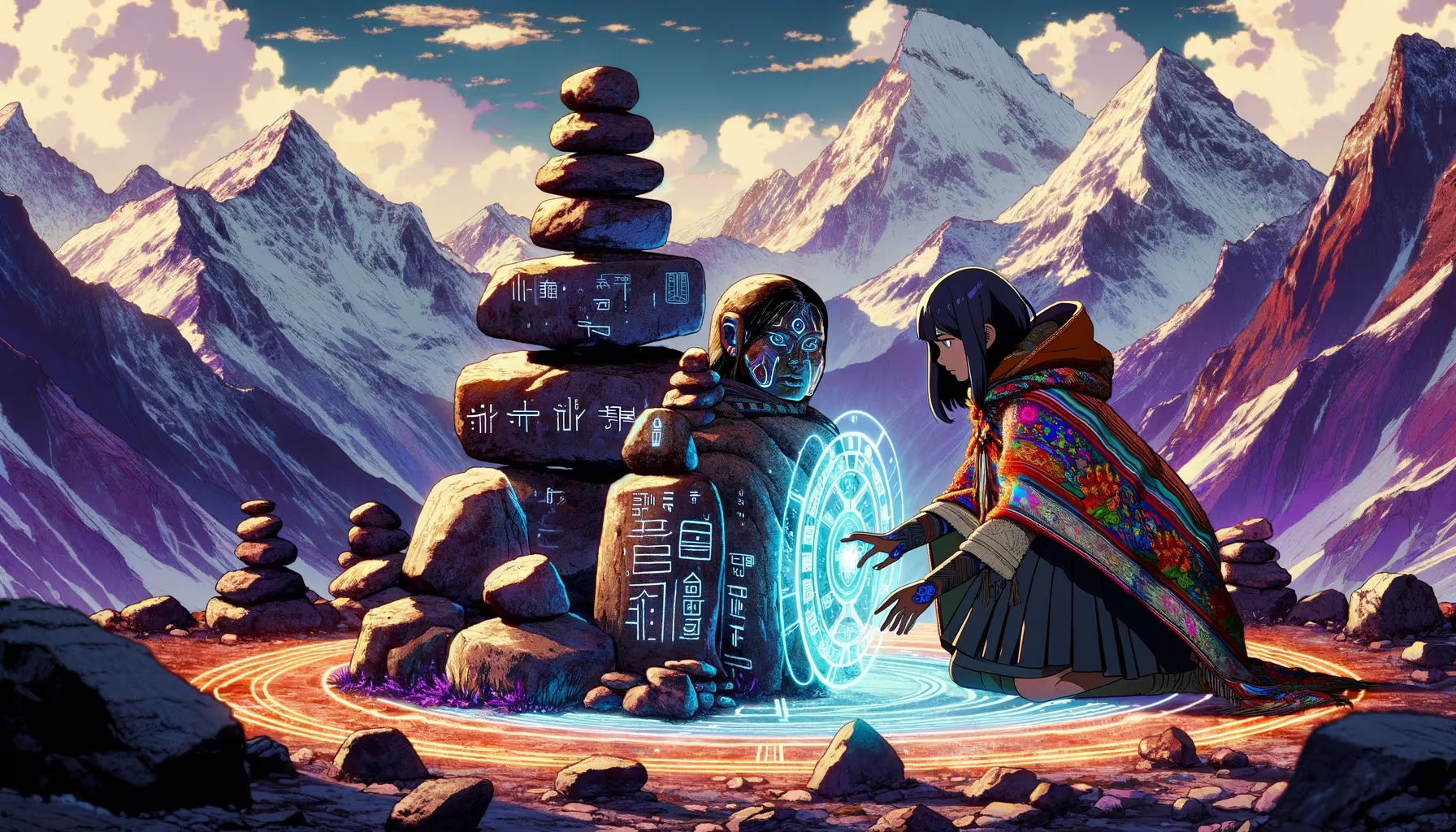
"The apacheta is the memory of everyone who crossed before us." At high altitude, stones become a map of courage and a language of belonging.
Apacheta as Living Geography: Wayfinding, Territory, and Collective Memory
Ancient Peru Research
A deep read of apachetas shows they are more than piles of stone: they are territorial markers, ritual pauses, and social memory devices. Studies on apachetas and May crosses in the Arica highlands identify multiple forms tied to passes, crossroads, shrines, and route transitions, each with specific offering patterns and community meanings.
This matters for your image: in harsh mountain travel, orientation is spiritual and practical at once. The apacheta marks where one asks for a good journey, leaves a trace of gratitude, and confirms belonging to a larger network of travelers. In this sense, the body, the route, and the mountain are read together as one system.
For accuracy, we should add one key distinction from the literature: not every stone marker is an apacheta, and some can be confused with sayhuas or other demarcation structures. That nuance makes the page stronger and more educational: Andean landscapes are highly coded, and each form has its own ritual grammar.
Research Sources
Next Quest Prompt: Next quest: Pair this high-pass memory page with a bridge or caravan page to show how apachetas organize movement, identity, and trust across the Andes.
Context and references
Use this page for cultural and geographic learning paths around the artwork.
Additional curated references for this piece will be expanded in the next content pass.