Story Mode
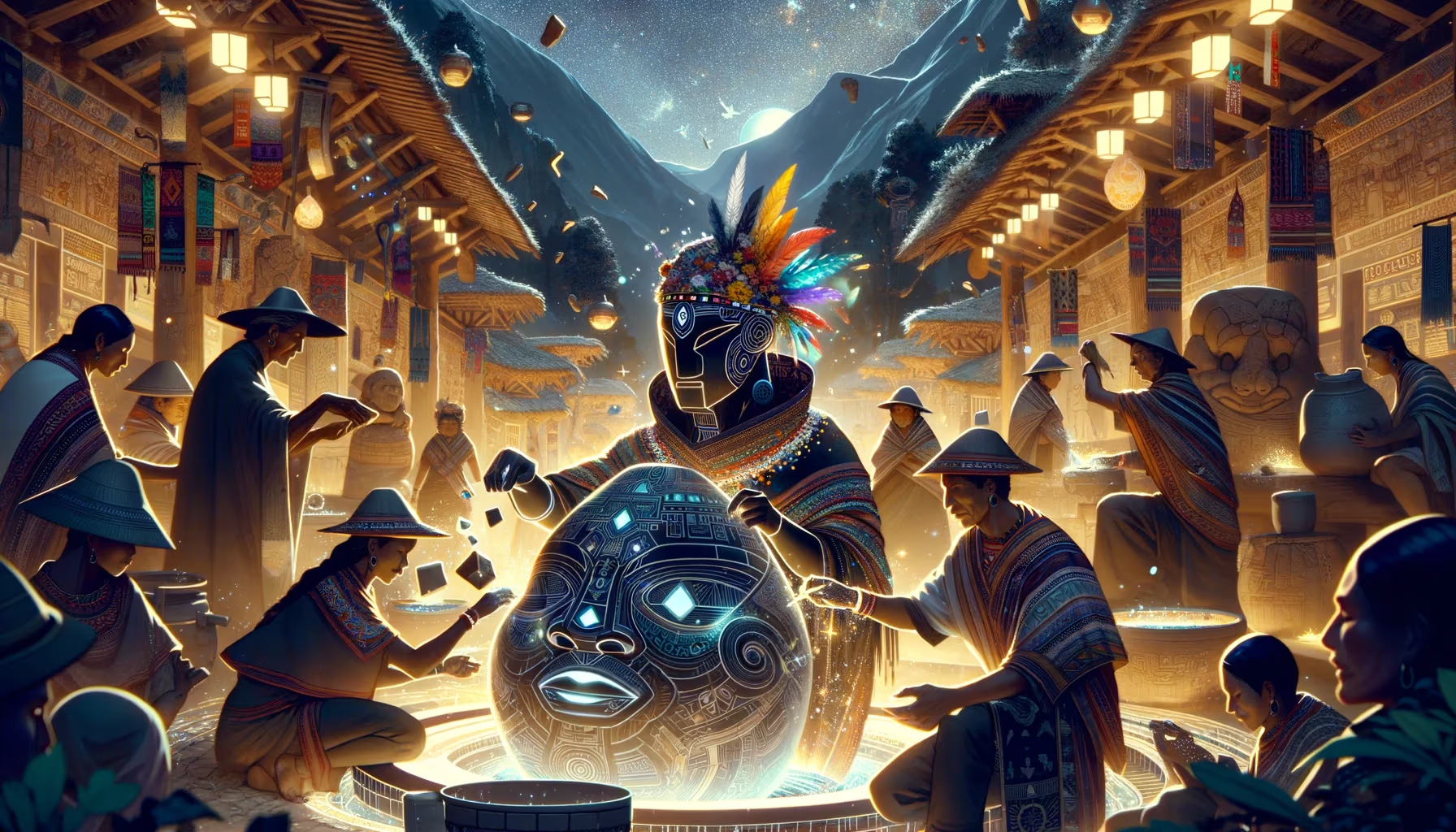
Do we choose the stone, or does the stone choose us? In Pachakuna lore, master builders listen before they lift. They read fracture lines, mountain weather, and ceremony routes, then move only what agrees to move. Every block is a pact between people, earth, and time.
Ancient Peru Context: The Engineering Intelligence of Stone
Ancient Peru Research
Your line lands perfectly because Peruvian monumental building spans deep time and multiple engineering traditions. At Caral-Supe, recognized by UNESCO as roughly 5,000 years old and among the oldest urban centers in the Americas, builders already organized large ceremonial architecture with pyramidal complexes and sunken circular courts. The key point is civilizational planning depth: Peru's architecture story starts early and at scale.
By the Chavin horizon, stonework is paired with environmental control. UNESCO describes Chavin de Huantar as an extraordinary ceremonial complex with dressed stone architecture, internal galleries, vents, and drainage systems. USGS-supported research on Chavin's canals argues that hydrologic engineering was intentional and sophisticated, including major labor investment in moving and controlling mountain water through ritual architecture.
In the Cusco sphere, megalithic fitting reaches global-icon status. UNESCO highlights Inca mastery of stone construction techniques, while Britannica describes massive stones in Inca walls estimated from about 100 to 300 tons. Current tourism-governance publications in Peru also describe Saqsaywaman blocks exceeding 120 tons. Exact tonnage varies by estimate and method, but the engineering reality is clear: precision quarrying, transport, and mortarless interlocking at extreme scale.
Modern analysis keeps validating the technical genius. Recent engineering work on Inca polygonal masonry explores how complex block geometries contribute to stability under seismic loading. Pair that with the Qhapaq Nan road network (over 30,000 km across the Andes) and we see the true marvel: not one isolated wall, but a full systems-engineering civilization integrating extraction, logistics, labor organization, hydraulic design, and earthquake resilience.
Research Sources
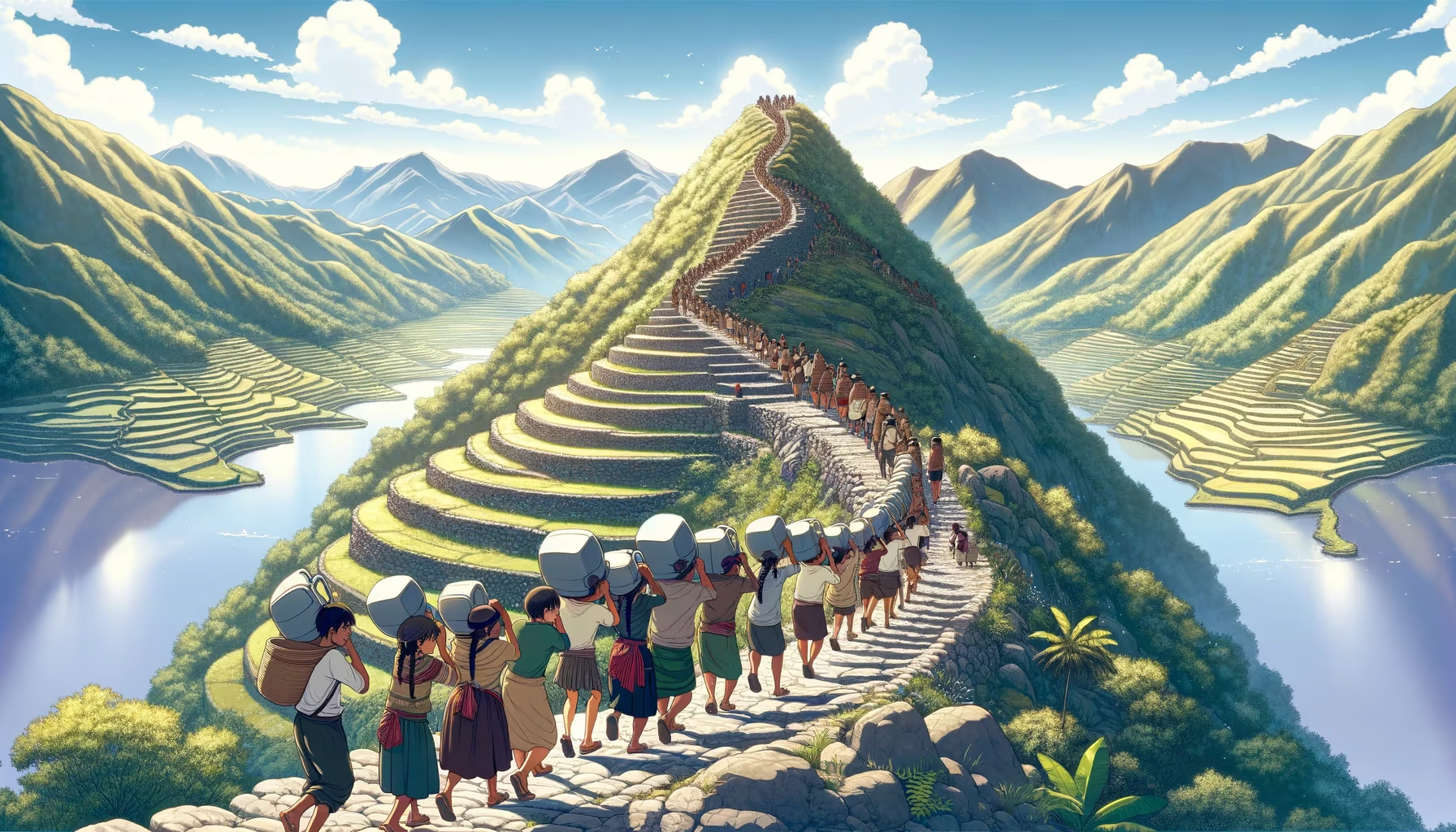
Next Quest Prompt: Next quest: Pair this stone-intelligence page with an image of transport teams, roads, or mountain cuts so visitors can connect the finished monument to the hidden logistics that made it possible.
Context and references
Use this page for cultural and geographic learning paths around the artwork.
Additional curated references for this piece will be expanded in the next content pass.