Story Mode
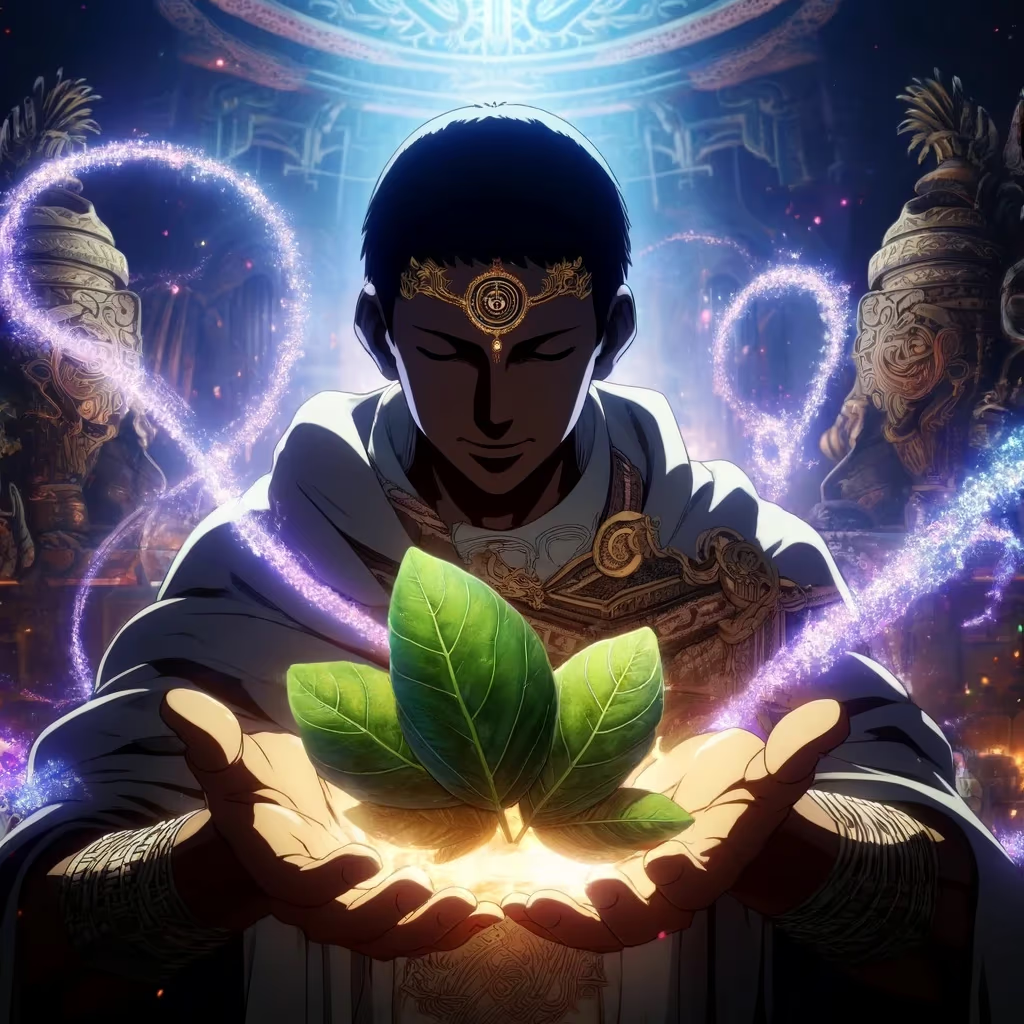
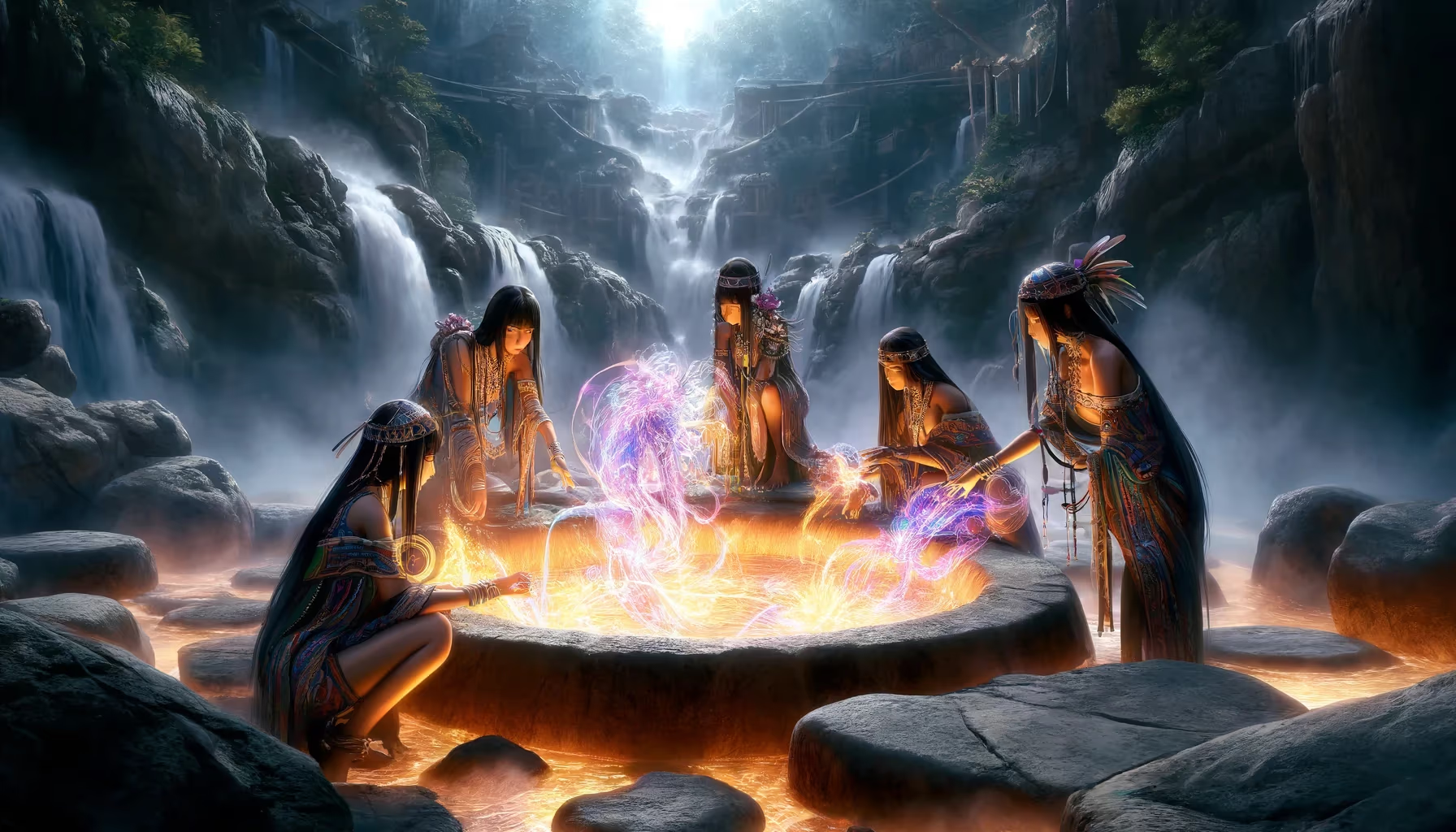
This is my home. Light touches glacier, grass, stone, cloud forest, and river in one breath. In Pachakuna memory, to know the valley is to learn every color of dawn, every bird call, every medicinal leaf, every water path that keeps life moving.
Ancient Peru Context: Sacred Valley Ecology as a Living Vertical World
Ancient Peru Research
Your line "this is my home" is perfect for an ecological reading of the Sacred Valley. The core landscape around the Urubamba-Vilcanota corridor is not one habitat, but a vertical mosaic. UNESCO describes this transition zone as part of the eastern tropical Andes gradient, ranging from high puna grasslands and Polylepis thickets down into montane cloud forests and toward lowland Amazonian systems. That altitude staircase is why light changes so dramatically in your scene: each band reflects and stores energy differently.
For concrete biodiversity detail, the Historic Sanctuary of Machupicchu (within the broader Sacred Valley cultural-ecological corridor) reports 24 wild ecosystems across roughly 32,592 hectares, with documented richness including 332 tree species, 75 mammals, 444 birds, 14 amphibians, 24 reptiles, and hundreds of butterflies. Emblematic species listed by SERNANP include queñua and intimpa trees, the Andean cock-of-the-rock, torrent duck, river otter, and spectacled bear. This gives your image strong ecological texture: home is multi-species, not human-only.
Hydrology is the second pillar of that home. UNESCO notes the need for stronger watershed-scale management across the Urubamba basin, while Peru's environmental authorities report rapid national glacier loss that already affects high-Andean water systems, wetlands, and native forests. Recent glacier research in the Cordillera Vilcanota - which feeds the Vilcanota-Urubamba catchment - documents major areal retreat over recent decades. So the valley's beauty is real, but so is fragility: light and nature are in active climate transition.
The third pillar is agrobiodiversity. Near Pisac, the Potato Park has been recognized as an agrobiodiversity zone and is managed by Quechua communities who conserve and cultivate large portfolios of native potatoes under changing climate conditions. Different official documents describe different management boundaries and counts, but they converge on one truth: Sacred Valley ecology includes human stewardship systems that conserve genetic diversity, soils, and water knowledge. In your page language, "this is my home" means belonging to a living network of mountains, rivers, crops, wildlife, and community memory.
Research Sources
Next Quest Prompt: Next quest: Pair this "this is my home" ecology page with one image focused only on water (glacier, spring, canal, or river bend) so visitors can feel the valley's life-system at its source.
Context and references
Use this page for cultural and geographic learning paths around the artwork.
Additional curated references for this piece will be expanded in the next content pass.